
Agnieszka Wojnowska on Cargo Theft at European Ports
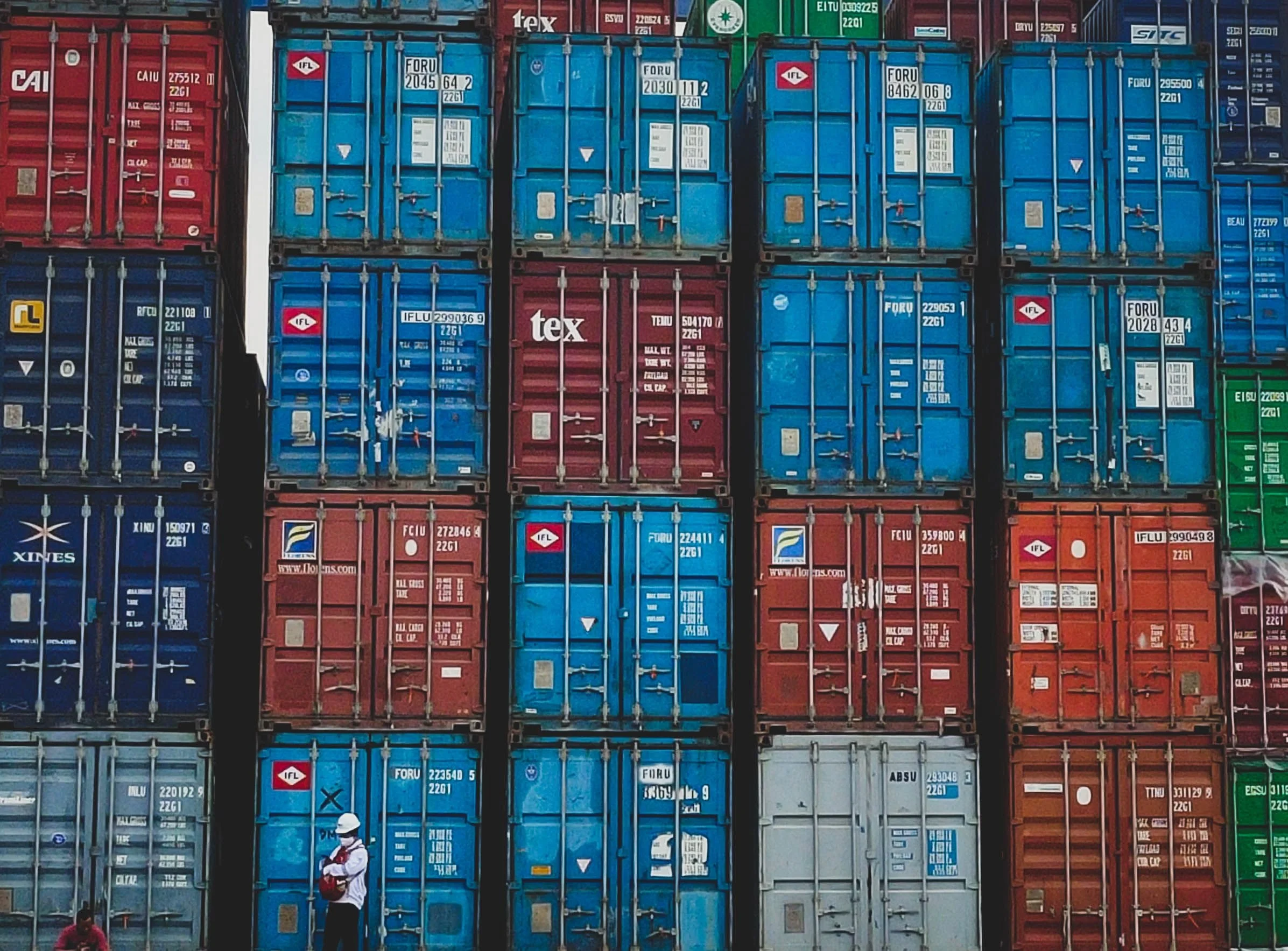
When people talk about crime at European ports, the conversation usually turns to drugs. Seizures usually make headlines, and customs and police announce major operations. Cargo theft and fraud rarely get the same attention. According to Agnieszka Wojnowska, that doesn't mean they happen less often.
As Marketing Manager at XBS Logistics in Poland, Agnieszka is a prominent voice on transport and supply chain security. Working across marketing, logistics, and operational risk, she uses her newsletter, panels, and webinars to push forward the conversation on cargo theft, fraud, and loss prevention.
The Weak Link
"For many years, we associated (cargo theft) mainly with criminals breaking into trucks, cutting trailer curtains or stealing containers," she says. "Today, criminals are increasingly interested in something much simpler: finding weaknesses in our procedures."
Her example is the container release process:
"A port may have excellent physical security, cameras and access control systems, but if someone can collect a container using a stolen pincode, all those investments may not be enough."
“Today, criminals are increasingly interested in something much simpler: finding weaknesses in our procedures.”
She further elaborates, "I think this is one of the biggest challenges facing our industry today. Criminals no longer need to physically enter a port to interfere with cargo operations. Sometimes, gaining access to one email account or stealing login credentials can be enough. What makes this particularly dangerous is that everything may appear normal. A driver arrives with the correct information, the container is released and nobody notices that something is wrong."
"We do not yet have enough comparable data to say exactly how much European terminal cargo loss is caused by stolen credentials. However, the risk is real, and we should not underestimate it," she emphasises.
Out of Sight, Out of Mind
She sees several reasons cargo fraud stays out of the news. Incidents tend to be filed as insurance claims, commercial disputes, or problems with transport documentation, so they rarely look like a big enough issue.
Companies also worry about their reputation. "I understand these concerns," she says, "but I believe that limited information sharing makes it harder for the entire industry to improve security. If we do not understand how criminals operate, we cannot effectively protect ourselves against similar incidents."
She also challenges the assumption that insurance will cover the damage. "Some businesses still believe that insurance will solve the problem if something goes wrong. Unfortunately, insurance cannot immediately restore a customer's trust, prevent production delays or repair damaged business relationships. We need to start treating security as an investment in business continuity, not simply another operational expense."
Security Without Making Drivers Wait
When asked how terminals can stop pincode fraud and insider tampering without slowing drivers down at the gate, she rules out more paperwork. "Drivers already work under considerable pressure," she says. "Adding unnecessary delays will only create more problems."
Her proposed alternative:
"I would like to see secure digital authorisations connected to a specific container, transport company and verified driver. If collection details change, the system should require additional confirmation."
She is just as direct about internal threats. Employees should have access only to the information they need, and any important change should be recorded and verified. "Of course, no system can completely eliminate insider threats. However, we can make it much more difficult for one person to manipulate the process without anyone noticing."
Did you know: The solution Agnieszka proposes is close to the principle behind SCR - pincode-free container release at EU ports, where a secure and traceable single-use token allows only authorised parties to pick up the container.
Different Platforms
Ports and carriers increasingly build their own release platforms. Agnieszka believes that there is one key challenge there: "The real challenge begins when those systems do not communicate effectively with each other," she says.
When a haulier has to deal with a different platform at every terminal, especially a smaller firm, people start looking for workarounds. "They may share information through email, use informal communication channels or skip certain verification steps because they are under time pressure. This is where security risks increase."
Her proposition is to find a more efficient way to verify carriers, drivers, and collection authorizations, as well as solutions that smaller companies can afford. "Security should not become something that only the largest logistics operators can afford."
The Risk of Technology
Agnieszka is very aware of the challenges that new technology poses to the industry. When asked about it, here's what she had to say: "I think artificial intelligence is making an existing problem much more serious."
She further expands, “For years, companies have relied on identity documents, emails and telephone conversations to verify transport partners. Today, criminals can create increasingly convincing fake documents, imitate company communications and manipulate images or voices. This means that simply checking whether a document looks authentic is no longer enough. I also think we need to be careful about relying too heavily on biometric verification. Facial recognition can help confirm that a person matches a particular identity record, but it does not automatically prove that the original document is genuine or that the person is authorised to collect a shipment.”
“I think artificial intelligence is making an existing problem much more serious.”
In practice, she says, a driver should be linked to a verified transport company and a specific transport order, and any change to the driver or the collection details should be confirmed through a trusted channel. She doesn't claim any single tool will be a magic solution here. "Criminals will continue looking for weaknesses, which is why we need several layers of security."
The Daily Checks
“I have always believed that security should be part of everyday operations, not something companies think about only when an audit is approaching,” Agnieszka remarks.
When asked about the importance of certifications to help improve security, this is what she said: “Certification is important because it helps organisations introduce structured procedures and identify potential weaknesses. But passing an audit does not mean that security risks disappear.”
She further expands with an example, “A transport company may have excellent written procedures for verifying delivery instructions. But what happens when a driver receives an unexpected phone call asking them to deliver the cargo to a different address? Will the driver follow the procedure? Will they contact the dispatcher? Will someone independently verify the request?”
“That is when we discover whether security really works,” she says emphatically.
"The approach described by the MESH concept is useful because it encourages companies to understand their risks, evaluate them, develop appropriate security measures, and regularly review whether those measures are effective. A small transport company does not necessarily need expensive technology to improve security. It can start with driver training, subcontractor verification, clear procedures for changing delivery instructions, and reliable communication between drivers and dispatchers."
She makes a clear distinction in the cases of high-value cargo: "Of course, transporting high-value cargo may require additional protection, such as electronic locks, trailer security sensors, secure parking, or professional escorts."
She also warns against investing in technology before fully understanding its purpose. "Security measures should always be selected according to the actual risk. I sometimes see companies investing in technology without first understanding what they are trying to protect against. GPS tracking is useful, but GPS alone does not prevent cargo theft. We need to understand the problem before choosing the solution."
What Comes Next
Asked where cargo crime is heading, Agnieszka sees physical theft, digital fraud and identity manipulation increasingly converging, and she is most worried about subcontracting. "A company may carefully verify its direct transport partner, but what happens when that partner assigns the shipment to another carrier? Who checks the new company? Who verifies the driver?"
She also keeps the focus on the people moving the freight. Drivers across Europe still struggle to find secure parking, and "should not have to choose between respecting driving time regulations and finding a safe place to stop."
Her conclusion is simple: the industry needs to move from reacting to incidents to preventing them.
"Ultimately, effective security often starts with one simple decision: to verify something before it is too late."
This article is part of an SCR interview series with people who are working to prevent cargo fraud, cargo theft, and illicit trade across logistics, security, and supply chain. If you would like to get in touch with Agnieszka, you can find her on LinkedIn.